With so many WordPress hosting providers available, choosing the right one can be challenging. Today, we’ll take a closer look at some of the top WordPress hosting services and explore what makes each of them different.
Choosing web hosting is one of the first important decisions you make when launching a website. A good host can give you faster pages, reliable uptime, better security, easier site management, and enough resources to grow. A poor choice can mean slow loading times, unexpected downtime, limited resources, and expensive renewals.
The challenge is that almost every hosting company claims to be fast, reliable, secure, and affordable.
So which hosts are actually worth considering in 2026?
Current industry comparisons also emphasize that the right host depends heavily on the website type, traffic level, budget, and technical requirements.
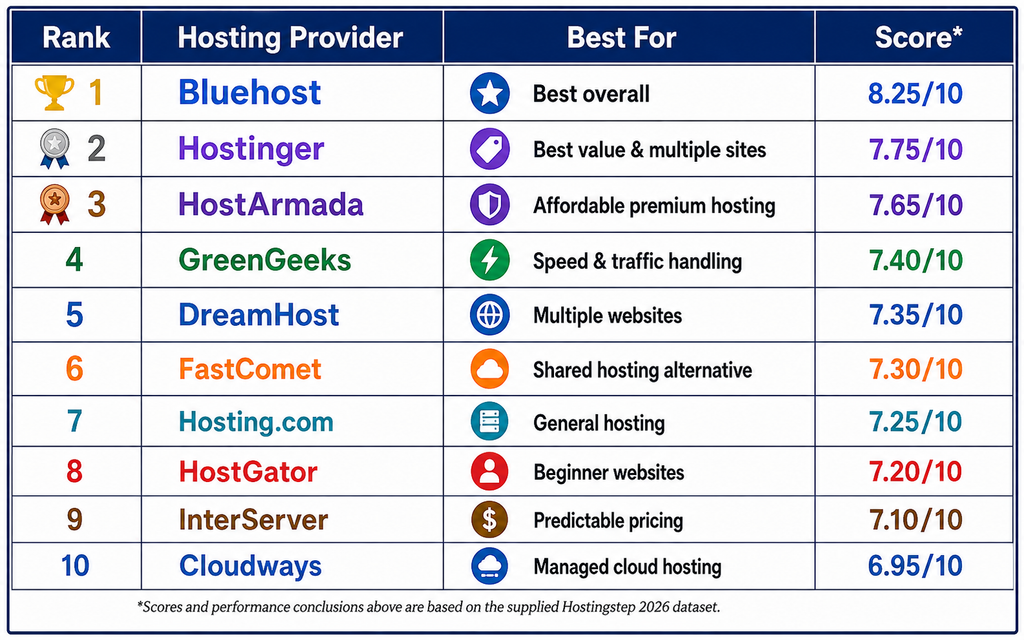
For the supplied 2026 performance dataset, Bluehost is the strongest overall recommendation, while Hostinger is an excellent choice for value and multiple websites, HostArmada for affordable feature-rich hosting, GreenGeeks for speed, and DreamHost for multi-site hosting.
Best Web Hosting Services at a Glance
1. Bluehost — Best Overall Web Hosting
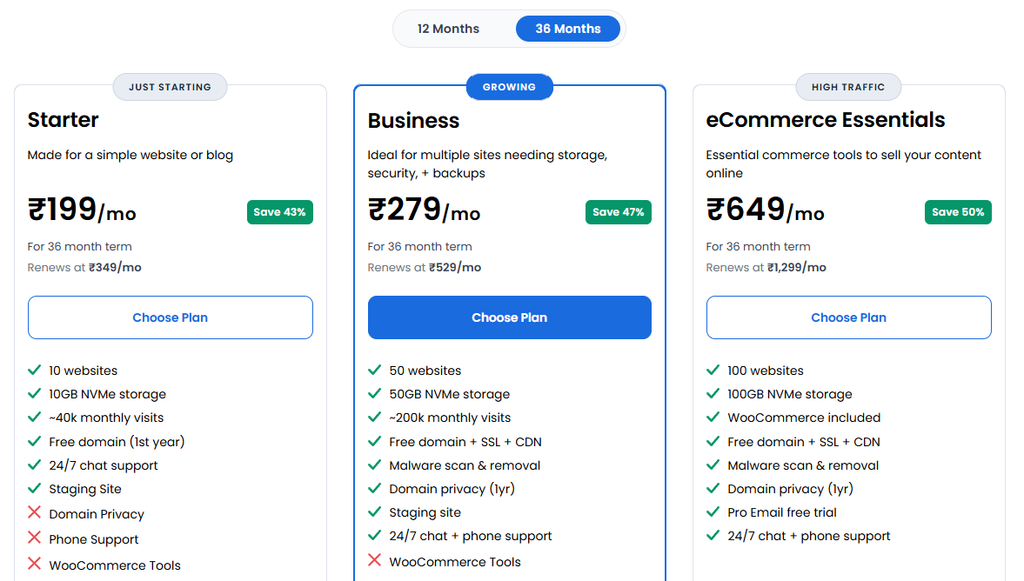
Bluehost is the strongest all-round option in the supplied 2026 test results.Its advantage isn’t that it wins every individual category. Instead, it performs consistently well across the areas that matter most to website owners:
- Website speed
- Uptime
- Traffic handling
- Global response time
- Server resources
- Security
- Backups
- Ease of use
The supplied testing gives Bluehost an overall score of 8.25/10, placing it ahead of every other provider in the comparison.
- Key strengths
- Excellent uptime performance
- Strong server resources
- Good traffic-spike handling
- Strong global response times
- Free SSL
- Backups and restoration
- CDN and caching features
- Staging functionality
- Free domain on eligible plans
- Website migration tools
- AI website-building features
- Beginner-friendly management interface
Bluehost is also currently positioned by other 2026 comparisons as a particularly practical option for people launching their first WordPress website.
Who should choose Bluehost?
Bluehost is a particularly good fit for:
- Small businesses
- WordPress websites
- Blogs
- Professional websites
- Service businesses
- New website owners
- Websites expecting moderate growth
Pros
- Excellent overall performance
- Very strong uptime
- Easy to manage
- Good collection of built-in tools
- Suitable for beginners and businesses
Cons
- Renewal pricing can be considerably higher than promotional pricing
- The cheapest plan has relatively limited storage compared with some competitors
Best overall choice for most website owners.
If you don’t have a highly specialized hosting requirement and simply want a reliable place to host your website, Bluehost should be near the top of your shortlist.
2.Hostinger — Best Value Web Hosting
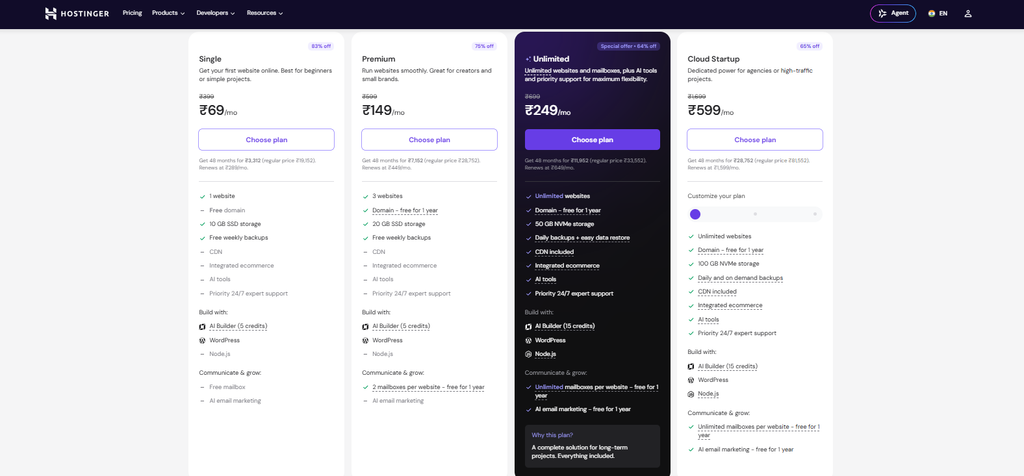
Hostinger is arguably the most compelling option for people who want strong performance without spending too much.
Current 2026 comparisons also place Hostinger very highly for overall value, citing its combination of performance, features, AI tools, and hosting choices.
The supplied performance dataset gives Hostinger Business an overall score of 7.75/10.
Why Hostinger is popular?
Hostinger offers a broad selection of features, including:
- Free SSL
- Free domain on eligible plans
- Website migration
- Backups
- CDN
- WordPress hosting
- Website builder
- AI website tools
- Multiple data-center locations
- Developer-oriented features
It also supports more than traditional WordPress websites. Developers can use technologies such as Node.js and Git-based workflows on appropriate plans. Current Hostinger information confirms support for shared, cloud, VPS, WordPress and website-builder products.
Hostinger is especially good for multiple websites
If you’re a:
- Freelancer
- Web designer
- Small agency
- Developer
- Blogger with multiple projects
Hostinger becomes particularly attractive.
Its higher-tier plans can accommodate multiple websites, making the cost per site much lower than buying separate hosting accounts.
Pro
- Excellent value
- Good performance
- Multiple hosting types
- Beginner-friendly control panel
- Strong selection of AI tools
- Suitable for multiple websites
- Developer-friendly
Cons
- Promotional pricing requires attention to the renewal rate
- Entry-level plans have fewer resources than premium plans
- The best performance features may require a higher-tier plan
Best choice for people who want a strong combination of price, performance and flexibility.
3.HostArmada—Best Affordable Premium Hosting
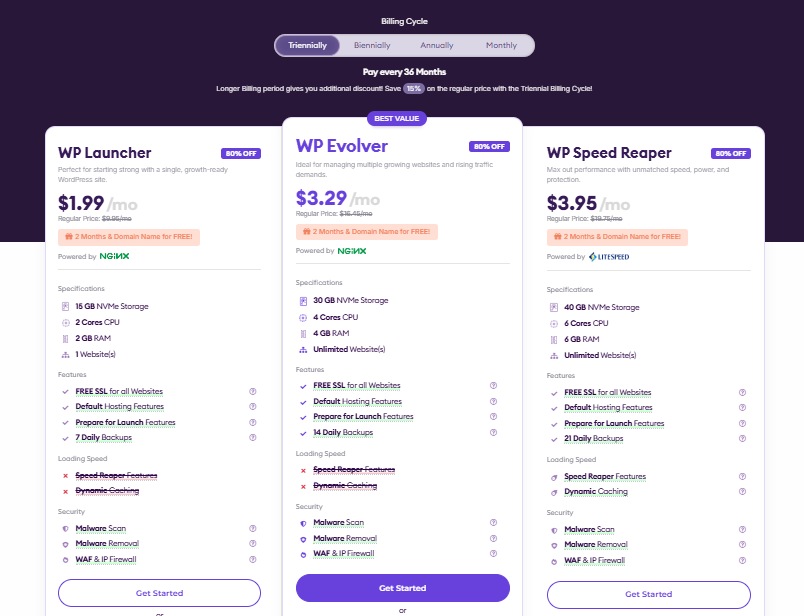
HostArmada is an interesting option for users who want something more feature-rich than basic budget hosting.The supplied 2026 performance data gives it an overall score of 7.65/10.
What makes HostArmada different?
Its hosting packages emphasize an all-in-one approach.
Depending on the plan, you can get:
- Free SSL
- Free domain
- Website migration
- Daily backups
- Malware scanning
- Malware removal
- Email hosting
- NVMe storage
- Cloud-based infrastructure
- Multiple server locations
Another current comparison highlights HostArmada’s cloud-oriented infrastructure, NVMe storage and strong loading performance as important strengths.
Pros
- Affordable introductory pricing
- Good load handling
- Daily backups
- Security tools
- Website migration
- Feature-rich plans
Cons
- Uptime performance in the supplied dataset trails the top two
- Hardware score was comparatively weaker
- Renewal pricing needs attention
A strong option for blogs, small businesses and content-heavy websites that want plenty of features without moving into expensive managed hosting.
- GreenGeeks
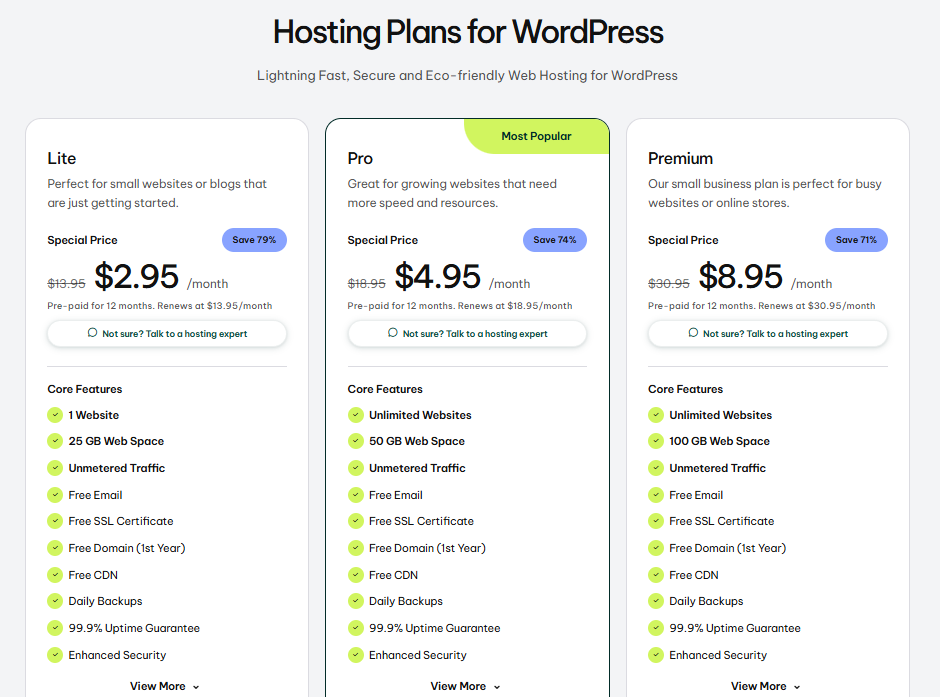
If website speed is your primary concern, GreenGeeks deserves a close look.
The supplied Hostingstep data identifies GreenGeeks as the fastest provider in its shared-hosting test, with particularly strong load-handling results.
Its overall score is 7.40/10.
Performance highlights
The supplied data reports approximately:
- 412 ms speed
- 26 ms load-handling response
- 99.93% uptime
The standout figure is load handling.
That means GreenGeeks can perform particularly well when a website receives increased simultaneous traffic.
The downside
The weakness is uptime.
The supplied monitoring recorded more outages than the leading providers during the measured period. That’s why GreenGeeks doesn’t take the overall #1 position despite its impressive speed.
Features
GreenGeeks offers features such as:
- Free SSL
- Free domain
- Daily backups
- CDN
- Website builder
- WordPress tools
- 24/7 support
Additional supplied research also highlights its LiteSpeed-based infrastructure and built-in performance tools.
Pros
- Excellent speed
- Outstanding load handling
- Good feature package
- Daily backups
- CDN
- Human support
Cons
- Uptime is weaker than Bluehost and Hostinger in the supplied dataset
- Higher plans can become considerably more expensive on renewal
Choose GreenGeeks when performance and speed are more important than having the highest possible uptime score.
5.DreamHost
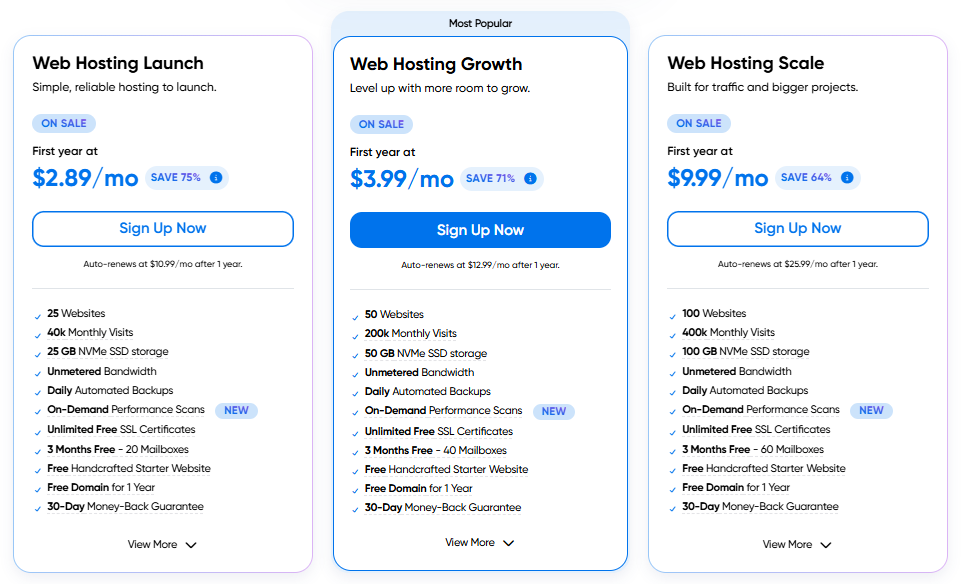
DreamHost isn’t the performance leader in this comparison, but it has a very useful advantage:
You can host many websites under one plan.
The supplied dataset highlights a plan supporting up to 25 websites, making DreamHost particularly appealing for freelancers and small agencies.
Its overall score is 7.35/10.
Performance
The supplied testing reports:
- Approximately 473 ms TTFB
- Approximately 99.95% uptime
- Approximately 147 ms load handling
- Approximately 385 ms global TTFB
That puts DreamHost around the middle of the performance field rather than at the very top.
Pros
- Multiple websites
- Good value for agencies
- Daily backups
- Free domain on eligible plans
- Beginner-friendly management
Cons
- Not the fastest host
- Load-handling performance trails the leaders
- Not ideal for resource-intensive websites
Excellent for freelancers and agencies that need to manage numerous smaller websites.
6.FastComet
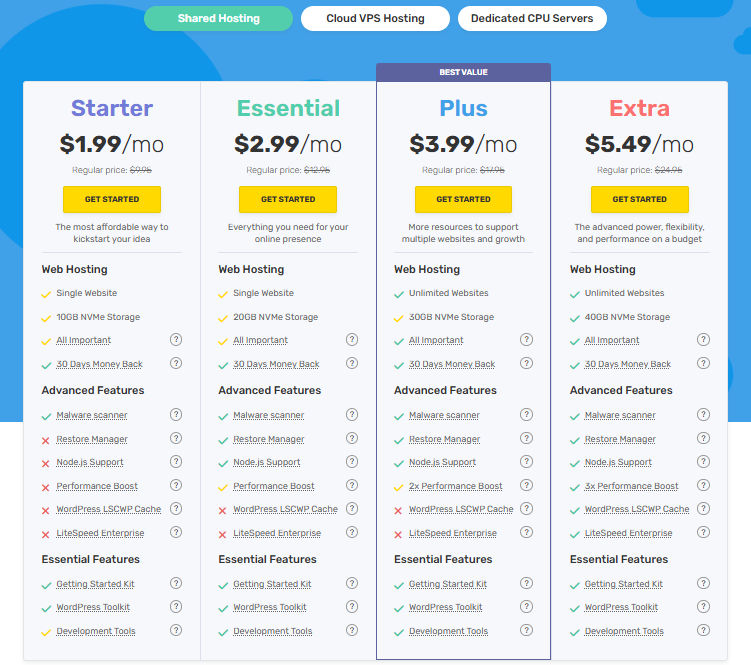
FastComet performed well enough to rank sixth in the supplied dataset.
However, the supplied research raises concerns about its infrastructure transition following its acquisition by Hosting.com.
For that reason, historical performance figures may not necessarily represent the environment a new customer receives today.
Verdict: Interesting, but we would currently favor the top five options.
7.Hosting.com
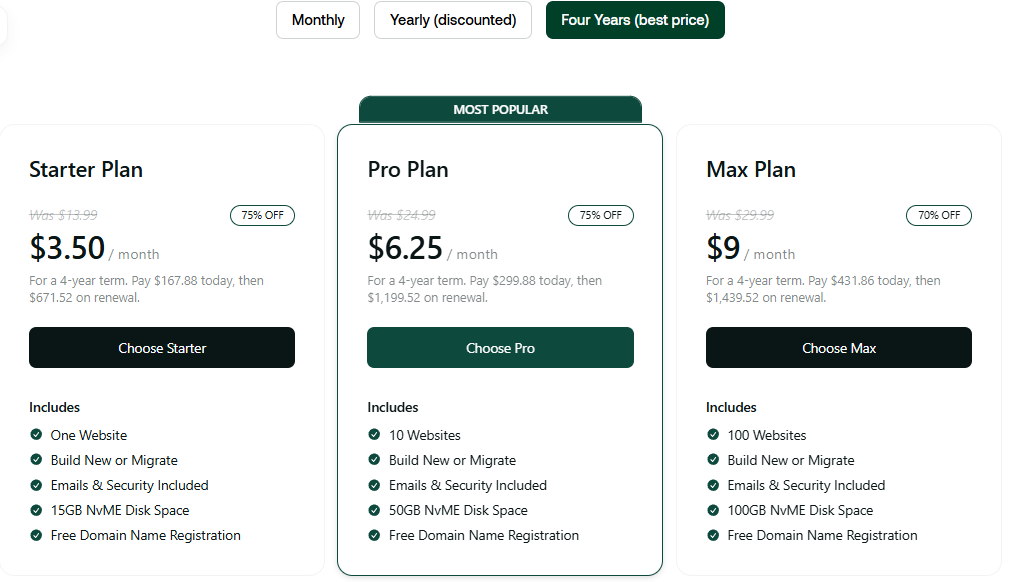
Hosting.com is another provider that requires some context because of its relationship with the former A2 Hosting brand.
A2 Hosting previously had a strong reputation for performance, but the supplied monitoring indicates that performance became less consistent after infrastructure changes.
Verdict: Consider alternatives unless you specifically need its current hosting configuration.
8.HostGator
HostGator remains a familiar option for beginners, but the supplied comparison doesn’t identify a major advantage over Bluehost.
Because the two brands share corporate ownership and increasingly similar infrastructure, Bluehost is the more compelling choice in this dataset.
9.InterServer
InterServer has an unusual advantage:
Its renewal pricing can be much more predictable.
The supplied data lists the same $2.50/month figure for introductory and renewal pricing.
That’s attractive compared with hosts that advertise very low introductory rates and then increase prices substantially.
However, the supplied monitoring recorded extended outages, which significantly affects its reliability score.
Best for: Users who value predictable pricing over maximum uptime.
10.Cloudways
Cloudways is designed for a different audience.
Instead of simply selling traditional shared hosting, it provides managed access to cloud infrastructure.
It’s worth considering for:
- Developers
- Agencies
- High-growth websites
- Advanced WordPress projects
- Users who need more control
The supplied data shows strong uptime and response-time characteristics but weaker load-handling performance during the measured period.
Best for: Users who understand cloud hosting and need managed infrastructure rather than simple shared hosting.
- Web Hosting Comparison
- Host Best Feature Main Concern Best For
- Bluehost Overall balance Renewal pricing Most websites
- Hostinger Value Plan differences Beginners & multiple sites
- HostArmada Feature package Hardware score Small businesses
- GreenGeeks Speed Uptime Performance-focused sites
- DreamHost Multi-site hosting Average performance Agencies
- FastComet Historical performance Infrastructure changes Alternative hosting
- Hosting.com General performance Consistency Experienced users
- HostGator Simplicity Limited differentiation Beginners
- InterServer Stable pricing Uptime Budget users
- Cloudways Managed cloud Load handling Developers
1.Speed
A fast server helps your pages respond quickly.
Important metrics include:
- TTFB
- Server response time
- Full page loading
- Caching performance
- CDN performance
- Database response
Modern 2026 hosting comparisons continue to treat speed as one of the central factors when evaluating provider.
2.Uptime
Uptime tells you how consistently your website remains available.
For a business website, downtime can mean:
- Lost customers
- Lost sales
- Lost leads
- Poor user experience
- Lower trust
A provider advertising a “99.9% uptime guarantee” isn’t necessarily equivalent to another provider making the same claim.
Always look at the actual SLA and independent monitoring.
3.Traffic Handling
This is one of the most overlooked hosting factors.
A website can load very quickly for one visitor and still collapse when hundreds of visitors arrive.
Good hosting should remain reasonably responsive during:
- Traffic spikes
- Marketing campaigns
- Viral posts
- Product launches
- Concurrent visitors
This is why load testing is valuable when comparing hosts.
Don’t Ignore Renewal Pricing
One of the biggest mistakes beginners make is choosing hosting based solely on the promotional price.
For example:
Year 1: $1.99/month
Renewal: $9.99/month
The first number looks fantastic, but the second number determines what you’ll pay over the long term.
Before purchasing hosting, compare:
- Introductory price
- Renewal price
- Contract length
- Number of websites
- Storage
- Backup policy
- Migration costs
- Email availability
- CDN
- SSL
- Support
Current 2026 comparisons similarly warn that promotional pricing can make hosts look much cheaper than their longer-term cost.
Conclusion
The rankings and performance figures attributed to the supplied testing dataset are based on the source material provided in this conversation; they are not our own server tests. Current market context was separately checked against 2026 hosting comparisons.